
MENTAL HEALTH

When you are struggling with thoughts of suicide

If you’re here because the pain feels like too much, or because you’re scared for someone you love, please don’t go through it alone. There is help, and there is hope.

You don't have to carry this alone. Talk to someone.

Need Someone to talk to RIGHT NOW?
A Hope Coach is here right now - free, 24/7, no judgment
National Suicide Hotline
CHAT ONLINE at 988lifeline.org
Call 988
Crisis Text Line
Text HOME to 741741 to connect with a Crisis Counselor - free 24/7, no judgment
Veterans Crisis Line
Veteranscrisisline.net
Call 988 and press 1
Text 838255
Hard of Hearing Crisis Support
Contact the Lifeline via TTY by dialing 800-799-4889.
Spanish Suicide Hotline
988lifeline.org/es/inicio/
Call 988
International Helplines
findahelpline.com
THE BASICS

What is really going on with suicidal thoughts?

Suicidal thoughts almost always grow out of pain that has become overwhelming — a sense that the hurt is unbearable and will never end. It’s important to understand this: when someone wants to die, they usually don’t truly want their life to be over so much as they want the pain to stop, and in that moment they can’t see another way out. The thoughts are a symptom of suffering that has temporarily crowded out hope — not a sign of weakness, selfishness, or a character flaw.

If you’re the one having these thoughts, please hear this gently: you are not crazy, you are not bad, and you are not alone. Pain this heavy is real, and reaching the end of your own strength doesn’t make you a failure. If you’re here because you’re worried about someone else, your concern matters and you are right to take it seriously. Either way, the most important thing to know is that suicidal pain, as permanent as it feels, is almost always temporary — and that help can make a genuine difference. Please don’t wait to reach out.
What does this struggle look like?
Whether you’re recognizing this in yourself or watching it in someone you love, these are some of the signs that the pain has become dangerous:
Talking about wanting to die, disappear, or “not be here”
Overwhelming pain that feels like it will never end
Withdrawing from people, activities, or things once loved
Giving away belongings, or saying goodbye as if leaving
Dramatic mood changes, or a sudden, unexpected calm after deep despair
Feeling like everyone would be better off without you

If any of this is true for you right now, or for someone you care about, please treat it as urgent — not to create panic, but because reaching out genuinely saves lives. You can call or text a suicide crisis line, contact a trusted person, or talk with a Hope Coach. In the U.S., you can call or text 988 (the Suicide and Crisis Lifeline) anytime, day or night. If you or someone else is in immediate danger, please call emergency services (911) right away.

Why does the pain get this heavy?
Suicidal thoughts don’t come from nowhere, and they’re rarely about one single thing. They tend to build when overwhelming pain meets a loss of hope — often fueled by depression or other mental health conditions, which literally distort how the mind sees reality, making things feel more hopeless and permanent than they actually are. Trauma, loss, abuse, crushing stress, loneliness, shame, or feeling like a burden can all pile on until the weight feels impossible to carry.

Here’s what’s crucial to understand: that feeling of “it will always be this bad” is the pain talking, not the truth. Depression and despair are powerful liars. They narrow your vision until you can’t see past the hurt — but the inability to see a way forward is a symptom, not a fact. People who once felt absolutely certain there was no hope, who survived their darkest moment, so often go on to feel grateful they did, and to find that life held things they couldn’t imagine in the dark. The pain is real; the hopelessness is lying. That’s exactly why reaching out and giving help a chance matters so much — it gets you through the moment to the other side, where the picture can change.
Want to talk it through?
A Hope Coach is here right now - free, 24/7, no judgment
You're not alone in this

Please, please don’t carry this alone. Whether you’re struggling yourself or aching over someone you love, reaching out is the bravest and most important thing you can do — and there is no shame in it. You can talk with a Hope Coach anytime, free and confidential.

You can call or text 988 to reach the Suicide and Crisis Lifeline, 24/7. If there’s immediate danger, please call 911. You don’t have to have the right words or a plan — you just have to reach out, and let someone help carry this with you. Your life matters more than the pain is telling you right now.

And if it feels like you’re at the very end of yourself, here is something to hold onto: you are not too far gone, and you are not beyond love. God is closest to people in exactly this kind of pain — “The Lord is close to the brokenhearted and saves those who are crushed in spirit” (Psalm 34:18). Even when your own strength is completely gone, his isn’t: “My flesh and my heart may fail, but God is the strength of my heart and my portion forever” (Psalm 73:26). He doesn’t see you as a burden or a disappointment; he sees you as deeply, unshakably loved, and he is not finished with your story. For many people, that love has been the thread that held when nothing else could. You’re welcome to reach toward it, even now — you don’t have to believe perfectly to be held.

Your life is worth fighting for, and you don’t have to fight alone. Please reach out right now — we’re here, and we are so glad you are too. (If you are in crisis, call or text 988, or call 911 if you’re in immediate danger.)

FAQ

Frequently asked questions about suicide

These are some of the most common questions people have about suicide. If you have more questions, please feel free to reach out to a Hope Coach.

I’m having thoughts of suicide — what should I do right now?
Please reach out immediately — you don’t have to face this alone or have the right words. Call or text 988 (the Suicide and Crisis Lifeline) anytime, talk with a trusted person, or chat with a Hope Coach. If you’re in immediate danger, call 911. Try to get to someone safe and not be alone right now. The pain feels permanent, but it can change — please give help a chance to reach you.
Do suicidal thoughts mean I really want to die?
Usually not — most people having these thoughts don’t truly want their life to be over; they want the unbearable pain to stop and can’t see another way in that moment. That distinction matters, because pain can be addressed and there are other ways through, even when you can’t see them yet. Reaching out helps you get to them.
How do I know if someone I love is suicidal?
Warning signs include talking about wanting to die, disappear, or be a burden; hopelessness; withdrawing from people and activities; giving away belongings or saying goodbye; dramatic mood swings; or a sudden calm after deep despair. If you’re worried, take it seriously — ask directly and caringly, listen without judgment, don’t leave them alone if there’s immediate danger, and help connect them to support like 988 or emergency services.
What do I say to someone who is suicidal?
Be direct and caring — it’s a myth that asking about suicide plants the idea; asking actually helps. Listen without judging, panicking, or minimizing their pain, let them know you care and they’re not a burden, and gently help them reach support (988, a counselor, or emergency services if there’s immediate danger). You don’t have to fix it; being present and helping them connect to help matters enormously.
Will things ever get better?
Yes — even though depression and despair make it feel like the pain will last forever, that feeling is a symptom, not the truth. So many people who were certain there was no hope, and who got through their darkest moment, go on to be deeply grateful they survived and find that life held things they couldn’t imagine in the dark. Getting through the moment, with help, is what makes the difference. Please reach out — you matter, and your story isn’t over.

Take this with you.

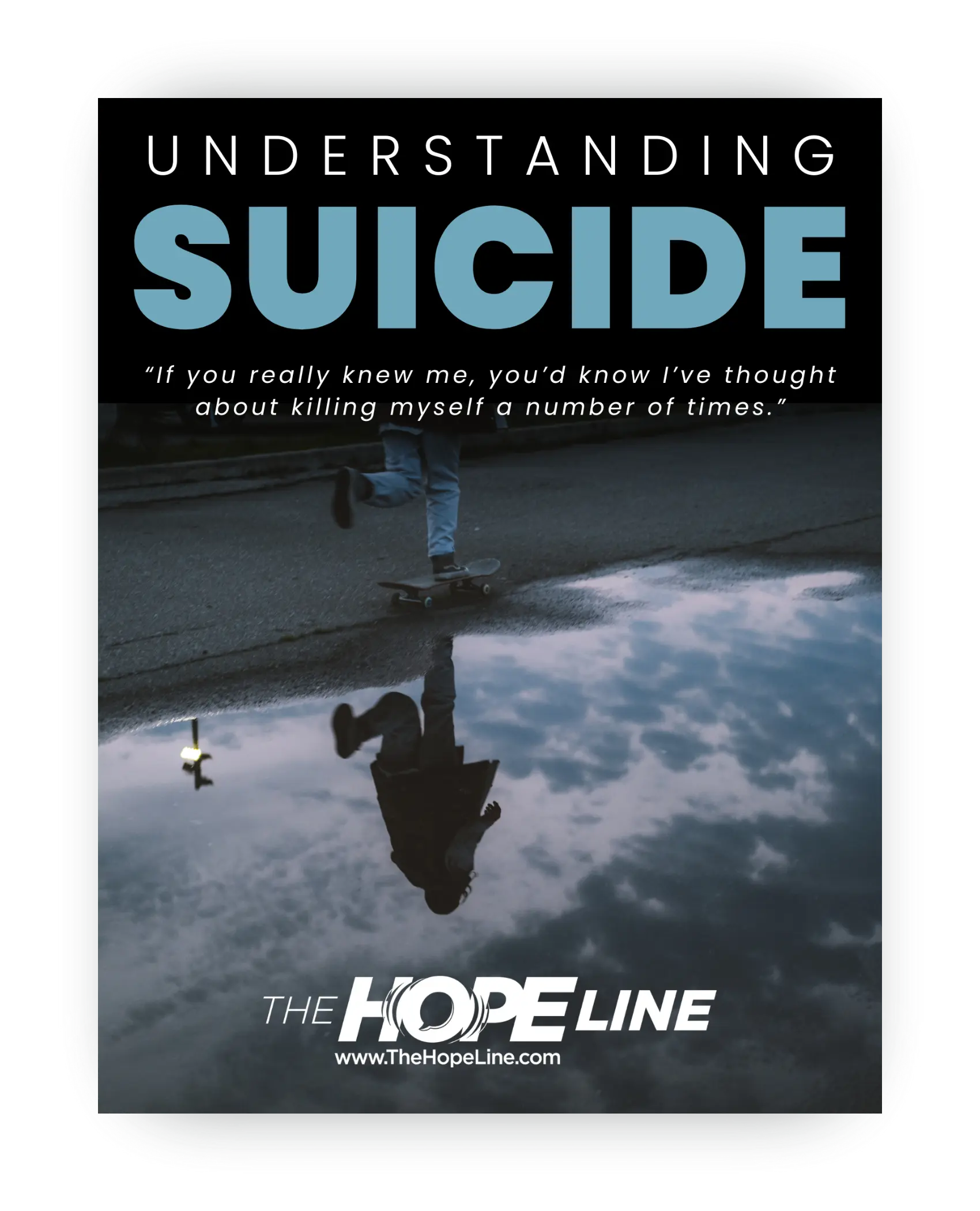
Whether you’re struggling yourself or worried about someone you love, this interactive free guide — with real stories from people who’ve walked this road — is a place to begin.
RESOURCES FOR YOU

More to explore

Helpful articles, resources, guides, and related topics.

Tired of The Problem?

Try the Solution.

Privacy Policy / Terms of Use
© 2026 TheHopeLine, Inc. Registered 501(c)(3). EIN: 20-1198064