TRAUMA

How do I get rid of shame?

Shame whispers that you’re not just flawed, but fundamentally bad — and it thrives in secret. Let’s drag it into the light, where it loses its power.
THE BASICS

What is shame really?

There’s an important difference between guilt and shame. Guilt says, “I did something bad.” Shame says, “I am bad.” Guilt is about behavior and can actually be healthy — it nudges you to make things right. Shame is about identity — a deep, painful belief that there’s something fundamentally wrong with you, that you’re unworthy, defective, or unlovable at the core. And that kind of shame doesn’t make you better; it just makes you hide.

Shame is one of the most painful and corrosive emotions there is, and one of the most universal — though almost no one talks about it, because shame’s whole strategy is secrecy. It convinces you that if people really knew you, they’d reject you, so you hide the parts of yourself you’re ashamed of. The cruel irony is that hiding keeps the shame alive. It can only survive in the dark.
What does shame feel like?
Shame is heavy and often hidden, even from yourself. You might recognize:
Feeling like if people saw the “real you,” they’d be disgusted or leave
Hiding parts of yourself, your past, or your struggles
Harsh self-criticism and a brutal inner voice
Feeling unworthy of love, success, or good things
Defensiveness, perfectionism, or people-pleasing to cover it up
Withdrawing or isolating to avoid being “found out”
If these are familiar, please know shame is a feeling and a belief — not the truth about who you are. And it can be healed.
Why does this happen?

Shame usually gets installed by experiences, especially early ones. Being criticized, rejected, abused, bullied, or made to feel “not enough” can plant the belief that you’re fundamentally flawed. Trauma, secrets, mistakes, and things done to you (which were never your fault) can all feed it. Sometimes shame even comes from absorbing messages — from family, culture, or religion — that you’ll never measure up.

Here’s what’s key: shame lies. It takes something you did, something that happened to you, or simply someone’s harsh opinion, and twists it into a verdict on your entire worth. But you are not your worst moment, your secret, your mistakes, or what was done to you. The path out of shame runs directly against its strategy: bringing it into the light with someone safe, who can offer empathy instead of the rejection shame predicts. Shame cannot survive being spoken and met with compassion.

Want to talk it through?
A Hope Coach is here right now - free, 24/7, no judgment
You're not alone in this

Whatever you’re ashamed of, you don’t have to keep it hidden, and you don’t have to carry it alone. Speaking your shame out loud to someone safe — a counselor, a trusted friend, a Hope Coach — and being met with understanding rather than rejection is often what finally breaks its grip. It can feel terrifying, and it is also where freedom begins.

There’s a promise that strikes directly at the heart of shame: “Those who look to him are radiant; their faces are never covered with shame” (Psalm 34:5). The God of the Bible already knows everything about you — every secret, every mistake, everything done to you — and he doesn’t turn away. He loves you fully, not the cleaned-up version you show the world, but the real you. For so many people, being fully known and still fully loved by God is exactly what dissolves shame’s power, because the thing shame fears most — being truly seen — turns out to be met with love, not rejection. You’re welcome to step into that light.

You are not what shame says you are. Reach out anytime — we’re here, no judgment.

FAQ

Frequently asked questions about shame

These are some of the most common questions people have about shame. If you have more questions, please feel free to reach out to a Hope Coach.

What’s the difference between guilt and shame?
Guilt says “I did something bad” — it’s about behavior and can be healthy, prompting you to make things right. Shame says “I am bad” — it’s about your identity, a belief that you’re fundamentally flawed or unworthy. Guilt can lead to growth; shame just makes you hide. Knowing the difference helps you address each rightly.
How do I get rid of shame?
Shame can only survive in secrecy, so the path out is bringing it into the light — speaking it to someone safe who meets it with empathy rather than the rejection shame predicts. That, along with recognizing shame’s lies and treating yourself with compassion, breaks its grip. It’s scary but freeing, and support makes it possible.
Why do I feel so much shame?
Shame usually gets installed by experiences — criticism, rejection, abuse, bullying, trauma, mistakes, or absorbed messages that you’ll never measure up. It takes those things and twists them into a false verdict on your whole worth. The intensity of shame reflects past wounds, not the truth about who you are.
Is shame the same as guilt or low self-esteem?
They’re related but distinct. Guilt is about behavior; shame is a deeper belief that you’re fundamentally bad or unworthy. Low self-esteem overlaps with shame but shame tends to be more visceral and identity-level. Toxic shame especially benefits from being addressed directly, often with support.
How can faith help with shame?
Shame fears being truly seen and rejected. Many people find that being fully known by God — every secret and mistake — and still fully loved is exactly what dissolves shame’s power, because the thing it dreads most is met with love instead of rejection. A Hope Coach would be glad to talk and, if you’d like, pray through it with you. (Shame can be a heavy, sensitive thing to carry — if you’re struggling, please reach out for support.)

Take this with you.

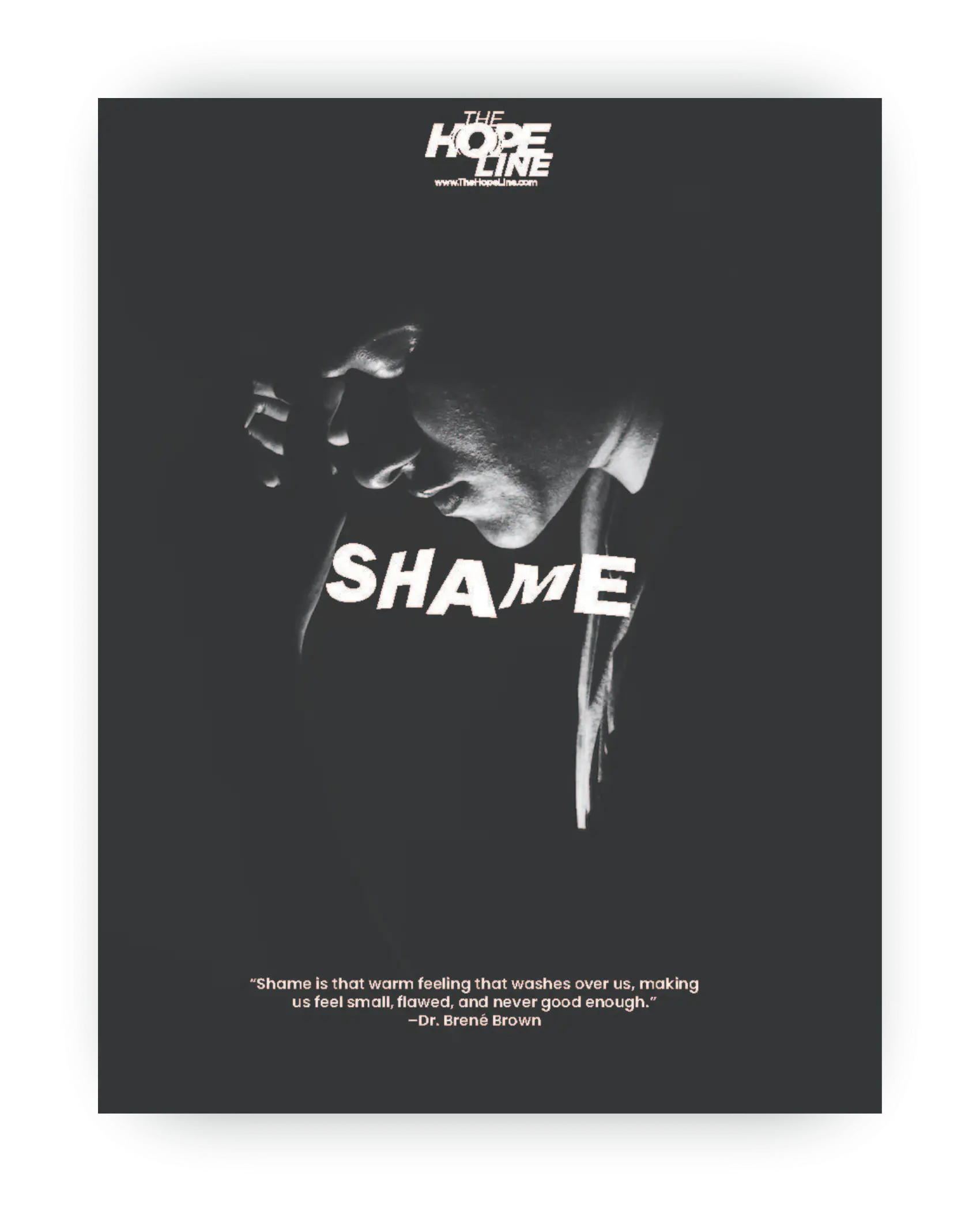
Shame thrives in secret. This free guide is a valuable resource for understanding shame, breaking its power, and finding the freedom of being fully loved.
RESOURCES FOR YOU

More to explore

Helpful articles, resources, guides, and related topics.

Tired of The Problem?

Try the Solution.

Privacy Policy / Terms of Use
© 2026 TheHopeLine, Inc. Registered 501(c)(3). EIN: 20-1198064