What's really going on with
parent issues?
The relationship with your parents is one of the most formative of your life — which is exactly why, when it’s strained, it hurts so much. “Parent issues” can cover a wide range: constant conflict, feeling controlled or not trusted, feeling unseen or not good enough, parents who are absent or checked out, or a relationship where love feels conditional or hard to feel at all.
If you’re asking “do my parents really love me?”, that question itself points to real pain that deserves attention. Here’s something important to hold: many parents do love their kids deeply but express it poorly — through pressure, criticism, control, or emotional distance — often because of how they were raised or their own unhealed struggles. That doesn’t make the hurt less real, but it can help you make sense of it.
What does it feel like when you're struggling?
Strained relationships with parents can show up in a lot of ways. You might be experiencing:
Frequent arguments, tension, or feeling like you can’t do anything right
Feeling controlled, not trusted, or never given space to be yourself
Pressure to meet expectations that feel impossible or not yours
Wondering whether their love is conditional on your behavior or achievements
Walking on eggshells, or dreading being home
Loving them and being hurt by them at the same time
All of these are common and painful. Feeling conflicted about your parents — loving them and struggling with them at once — doesn’t make you ungrateful or wrong.
Why do parent relationships get strained?
Parent-child relationships get hard for all kinds of reasons. The teen and young adult years naturally involve pulling away and forming your own identity, which often creates friction. Parents and kids communicate differently, want different things, and sometimes simply don’t understand each other. And many parents are doing their best with limited tools — repeating patterns from their own upbringing or struggling with their own stresses and wounds.
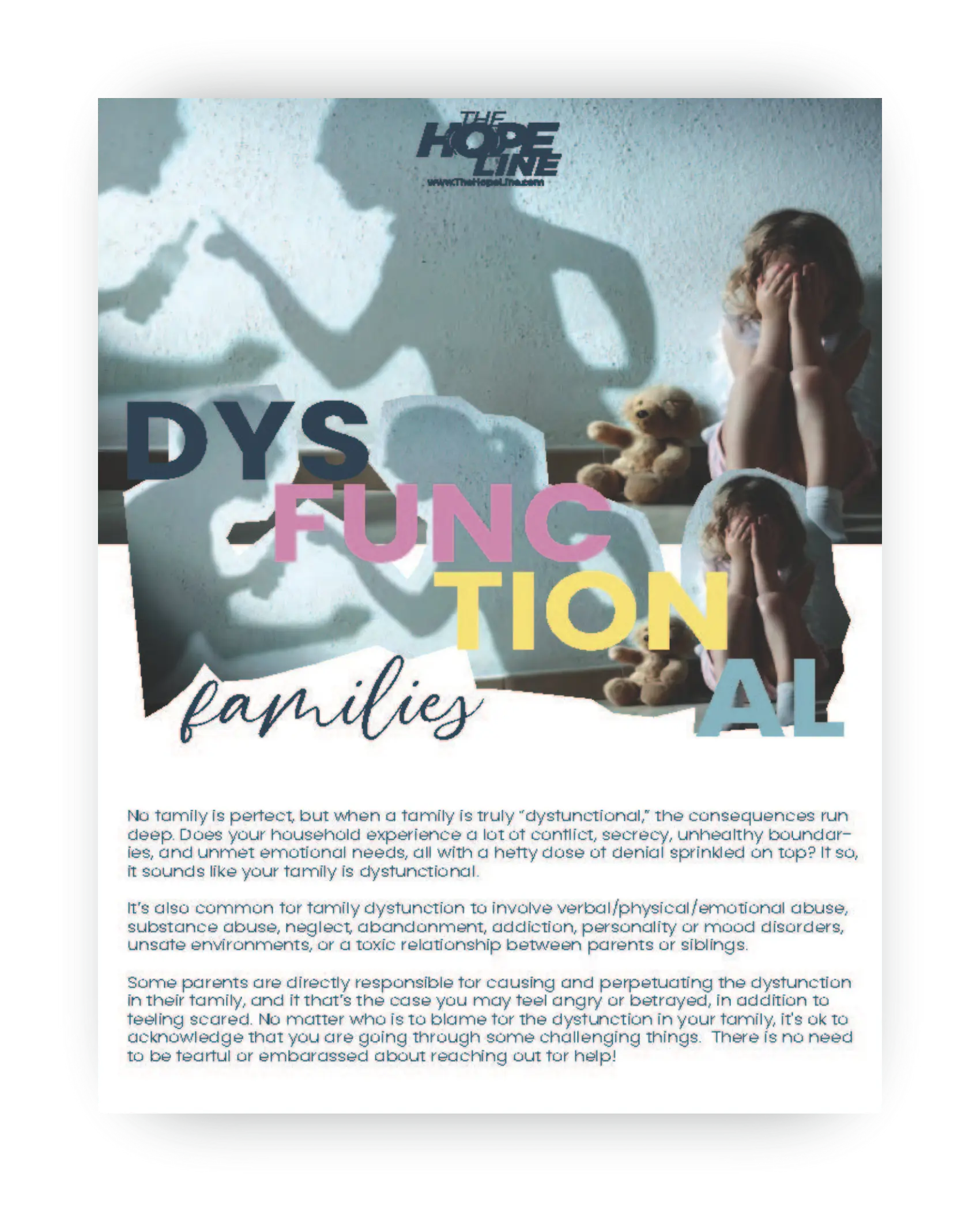
Sometimes, though, the issues run deeper — into genuine dysfunction, neglect, or harm. It’s important to be honest about the difference. A strained-but-loving relationship can often be improved with communication and patience. A genuinely harmful one calls for boundaries and support. Either way, understanding what’s really going on — rather than just blaming yourself — is where things start to get clearer. And whatever your parents did or didn’t give you, it doesn’t determine your worth.
Want to talk it through?
A Hope Coach is here right now - free, 24/7, no judgment
You're not alone in this
Parent-child relationships get hard for all kinds of reasons. The teen and young adult years naturally involve pulling away and forming your own identity, which often creates friction. Parents and kids communicate differently, want different things, and sometimes simply don’t understand each other. And many parents are doing their best with limited tools — repeating patterns from their own upbringing or struggling with their own stresses and wounds.
Sometimes, though, the issues run deeper — into genuine dysfunction, neglect, or harm. It’s important to be honest about the difference. A strained-but-loving relationship can often be improved with communication and patience. A genuinely harmful one calls for boundaries and support. Either way, understanding what’s really going on — rather than just blaming yourself — is where things start to get clearer. And whatever your parents did or didn’t give you, it doesn’t determine your worth.